
Artificial plants create privacy in commercial spaces by breaking sightlines, softening acoustics and guiding movement without heavy construction or maintenance.
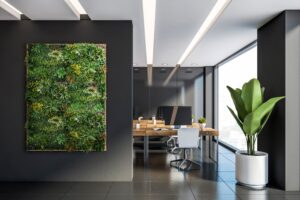
Use dense hedging in troughs to shield desks, modular green wall panels to divide zones, tall trees to punctuate seating areas, or overhead planting to frame booths.
With the right height, foliage density, and specification, commercial artificial plants offer reliable screening in offices, hospitality, retail, and events while remaining clean, consistent, and compliant with FR or UV requirements where specified.
What an artificial plant privacy screen is
An artificial plant privacy screen is any freestanding, fixed or suspended structure that uses lifelike foliage to restrict views or suggest separation between areas.
It can be a planter with dense hedging, a bamboo cluster set into troughs, a framed vertical green wall, a movable divider on castors or a ceiling-suspended feature with trailing greenery.
Unlike solid partitions, planting keeps spaces feeling open and biophilic while still creating focus, comfort and a sense of refuge for staff and customers.
Where screens add value in commercial spaces
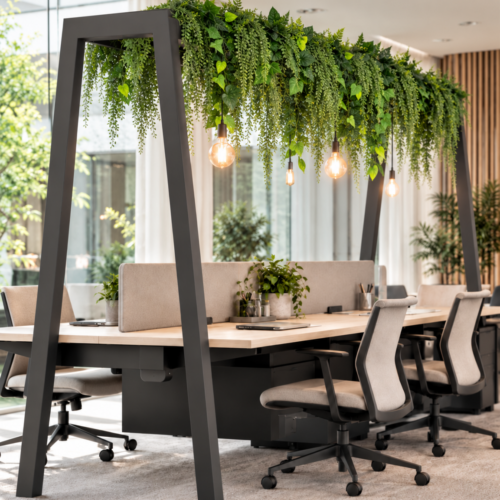
Open-plan offices often need softer divisions between hot desks, collaboration benches, and quiet zones. Planting along desk ends, beside breakouts and around phone booths reduces visual distraction and helps people settle.
Receptions benefit from screens that hide printer points or back-of-house doors while keeping a welcoming feel.
In hospitality, planters between banquettes create cosy seating nooks, while taller foliage helps shield passers-by at window tables. Bars use hanging planting to hint at boundaries above counters without closing the room.
For retail, screens guide queuing, soften fitting-room corridors and separate back-of-house prep from shop floors. Event organisers rely on modular green walls to create backdrops, backstage corridors and sponsor zones that photograph well from every angle.

Outcomes to aim for with plant-based screening
Effective privacy screens do more than hide views. The best designs manage sightlines at seated and standing eye level, reduce the sense of being overlooked and quieten busy spaces by breaking up sound paths.
Foliage is not a substitute for acoustic panels, but leaves, branches and textured surfaces help absorb and scatter some noise compared to hard partitions.
Planting also supports wayfinding, encouraging natural flows to meeting rooms or tills, and improves perceived quality by adding colour, texture and brand personality in places where real plants struggle to thrive.
Popular screen formats using artificial greenery
- Modular artificial green wall panels on frames: precise coverage, consistent density and a slim footprint.
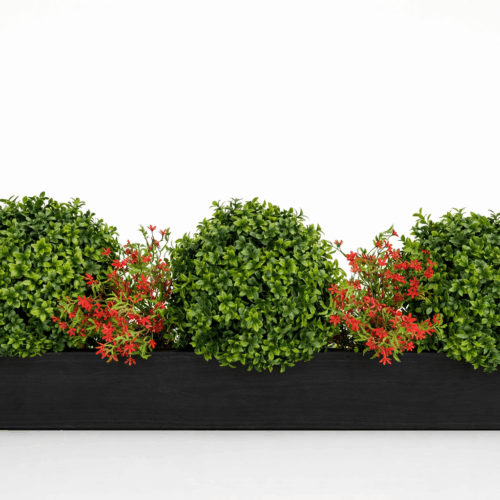
- Tall artificial hedging in trough planters: boxwood or mixed foliage for strong, opaque screening.
- Bamboo or grass clusters: lighter, semi-private divisions with height and texture.
- Mobile planters on castors: flexible space planning for events or seasonal layouts.
- Overhead rafts and hanging trails: partial separation above counters or booths.
Design principles for effective screening
- Height and sightlines: aim for 120 to 140 cm for seated privacy and 160 to 180 cm where people stand or pass close by.
- Foliage density: broadleaf mixes and layered planting block views more effectively than sparse stems.
- Stability and safety: choose weighted bases, consider anti-tip brackets and keep clear of emergency equipment.
- Flexibility: modular widths and lockable castors help refine layouts as teams and trading patterns change.
- Access and compliance: maintain corridor widths, keep exits visible and coordinate with your fire risk assessment.
Specifications for commercial environments
Product specification matters in busy spaces. For interiors, flame-resistant options help support fire safety policies. Choose foliage and green wall panels that are supplied as FR where a venue or risk assessment requires it.
For exteriors, UV-stable ranges resist fading in sunlight, helping screens on terraces, balconies and pavement seating stay fresh for longer. In high-traffic areas, durable planters with robust liners reduce scuffs and make cleaning straightforward. Where tamper resistance is desirable, specify concealed fixings or integrated frames.
Cleaning is simple, usually a light dusting and an occasional wipe with a damp cloth, which suits hygiene-sensitive environments such as healthcare waiting rooms and food service areas.

Foliage choices and privacy levels
Different species and forms change how private a screen feels. Buxus-style hedging offers near-opaque coverage with a crisp architectural look, ideal for corporate reception lines or office focus pods.
Mixed-leaf green wall blends add depth and a natural look without feeling blocky, making them well-suited to hospitality feature walls and retail backdrops. Bamboo adds height and movement, with dappled views between stems, making it a good fit for restaurant banquettes where full opacity is not required.
Olive, ficus and other broadleaf trees create soft canopies that shield at head height while keeping the floor area open. Trailing plants in overhead rafts help frame counters and booths, improving perceived separation without narrowing the floor.
Consider leaf thickness, branching habit and colour. Darker, broader leaves close gaps quickly. Variegation adds visual richness but may reduce opacity if used alone. Double-sided planting or staggered rows in a trough boost coverage where people view a divider from both directions.
Installation and practicalities
Measure the full run including planter footprints, not only the foliage width. Check skirtings, radiators and plinths along walls that could steal space.
Where ceiling services or sprinklers sit above screens, use open framing or leave a small setback to maintain coverage and access.
For tall dividers in public areas, plan for anchoring or anti-tip solutions. Mobile options need lockable castors and cable management if they sit near power or data. For green walls, frames can be freestanding or wall-mounted, depending on the substrate and the load the structure can support.
Delivery routes also matter, so confirm lift dimensions, out-of-hours access, and floor protection during installation. If you need a one-off size or a perfectly fitted wall, explore Evergreen’s bespoke artificial green walls for made-to-measure builds.
Planning factors to budget and timeline
Privacy screens are usually priced based on run width and height, foliage type and density, planter specifications, and any FR or UV requirements. Branding, custom colours, integrated lighting and complex shapes add design time and materials.
Bespoke frames and large made-to-measure green walls require drawings and approvals, which adds lead time. For many commercial projects, a workable path is to use standard modular elements for most runs, then add bespoke pieces where a perfect fit or feature moment is needed.
Allow time for a site check, material sign-off and any landlord permissions in managed buildings.
Real-world scenarios
Open-plan office focus pods: A pair of 160 cm hedging troughs run back-to-back to create a calm nook with a small table and two chairs. The planters keep the footprint slim while giving a solid visual barrier to the main benching area.
Restaurant banquette separation: 130 cm bamboo planters between back-to-back seats create a soft veil. Guests feel tucked away, staff can still see table status, and light remains even across the room.
Retail fitting corridor: Slim green wall panels on shallow frames line a short approach to fitting rooms, hiding stock doors while doubling as a brandable backdrop for merchandising.
Hotel terrace windbreak: UV-stable buxus hedging in weighted troughs defines a pavement seating edge. The greenery reduces the sense of exposure to the street and holds its colour through the season.
These examples show how small changes in height, density, and planter style can shift a screen from soft separation to confident privacy without closing off a space.
How Evergreen Direct can help
If you want support designing privacy screens that fit your brand, footprint and safety requirements, explore Evergreen Direct’s commercial artificial planting solutions and bespoke options.
Our team can advise on suitable foliage, FR and UV specifications and the best mix of modular and made-to-measure elements for your site. See the ideas and next steps on the Evergreen Direct website, on the commercial space page.
Ready to explore options, share measurements or discuss a layout plan? Get in touch, and we will help you turn a privacy brief into a practical, lifelike planting scheme that works day in, day out.
Frequently Asked Questions
What height should an artificial privacy screen be in a commercial space?
For seated privacy, aim for 120 to 140 cm so the line of sight is blocked at head and shoulder level without feeling overbearing. For standing areas, or where people pass closely, 160 to 180 cm is usually more effective. Mix heights if a run passes both sitting and standing zones, for example banquettes beside a circulation route.
Do I needflame-resistant artificial plants indoors?
Follow your venue’s fire risk assessment and policies. Many commercial interiors specify FR foliage or panels for screens and green walls. Evergreen offers FR options across suitable ranges, including FR-rated green wall panels, so you can meet your safety requirements while maintaining a realistic look.
Which artificial plants give the best visual privacy?
Dense buxus-style hedging in troughs provides near-opaque coverage for strong screening. Mixed-leaf artificial green walls create continuous coverage with a natural look and consistent density. For softer, semi-private screening, bamboo clusters add height with dappled views between stems. Broadleaf trees, such as ficus or olive, work well where you want head-height shielding without closing the floor.
Can you make mobile plant screens with lockable castors?
Yes. Mobile planter dividers are a practical choice for events and spaces that require seasonal reconfiguration. Choose weighted troughs with lockable castors for stability, and consider cable management if the screens sit near power or data. Where added security is required, fixed or anchored frames can be used instead.
What details do you need to quote a made-to-measure screen?
A quick brief should include overall run width and target height, indoor or outdoor location, desired foliage type or look, any FR or UV requirement, planter or frame style, and notes on fixing preferences or mobility. Photos of the space and rough measurements help our team suggest suitable modules or bespoke builds.
How do I clean and maintain artificial plant privacy screens?
Most screens only need light dusting and an occasional wipe with a damp cloth. In high-traffic areas, choose durable planters and robust liners for easier cleaning. For outdoor screens, UV-stable foliage helps retain colour, and a periodic rinse removes surface dust or pollen.