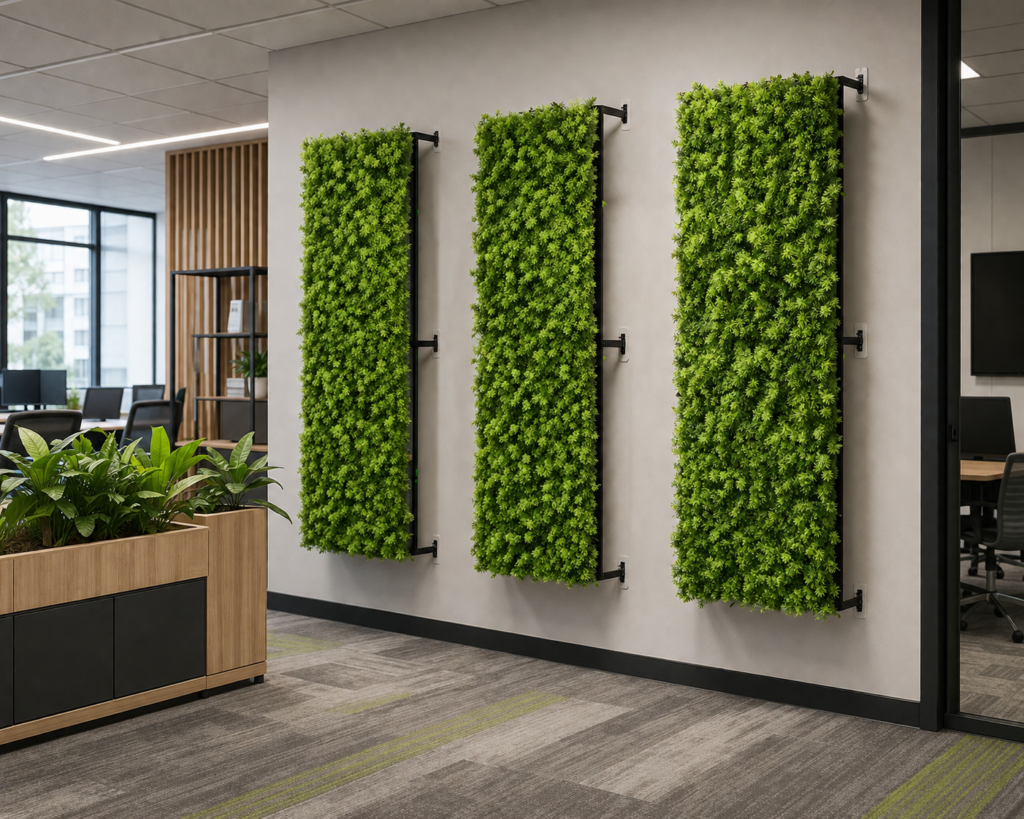
Adding greenery to a wall can change the feel of a garden, office, restaurant or living space without taking up valuable floor space. The harder decision is choosing how you want that greenery to work day-to-day.
If you are deciding between an artificial green wall or living wall, the best option usually comes down to how much maintenance you want, whether the space receives enough sunlight, how practical irrigation is and whether you want living plants or simply the appearance of natural greenery.
A real living wall can provide genuine planting and environmental benefits, but it also needs suitable growing conditions and regular care. An artificial living wall recreates much of the visual appeal without soil, watering or ongoing plant maintenance.
There is no single right answer. The best choice depends on the space, how the wall will be used and how much time you want to spend maintaining it.
What Is the Difference Between an Artificial Green Wall and a Living Wall?
An artificial green wall uses artificial plant foliage, usually arranged across wall panels that are attached to a suitable surface. The plants do not grow, so they do not require soil, watering, sunlight or irrigation systems.
A living wall uses real plants growing vertically. Depending on the design, this might involve planting systems containing soil or another growing medium, irrigation, drainage and supporting structures.
The key difference is the level of care involved. A real living wall uses living plants and needs regular maintenance, while an artificial living wall uses faux foliage and requires very little upkeep. Living walls can offer genuine environmental benefits, while faux green walls provide consistent greenery year-round and can be installed in places where real plants may struggle.
That distinction is important because both options can create a similar visual impact, but the way they perform over time is very different.
How Does a Real Living Wall Work?
Living walls allow real plants to grow vertically rather than in traditional beds or pots.
Some systems use individual modules or planting pockets fixed to walls. Others use containers, structural frames or engineered planting systems that hold the roots, soil and irrigation equipment in place.
The Royal Horticultural Society explains that green walls can range from straightforward climbing plants to more complex systems using growing media and irrigation. Its guide to green walls provides a useful overview for anyone considering natural vertical planting.
There are several approaches to natural wall planting.
Direct Greening
Direct greening usually involves climbing plants attaching themselves directly to a wall or growing closely against the surface.
Ivy is one familiar example and can be used to soften exterior walls or create a more natural green appearance over time.
Indirect Greening
Indirect greening uses a support system, such as wires, a trellis or a frame, which allows climbing plants to grow without attaching directly to the wall.
This method can make the planting easier to control and can reduce direct contact between the plants and the wall itself.
Living Wall Systems
More complex living wall systems use dedicated planting panels or containers attached vertically.
These systems often require controlled irrigation and careful plant selection because the plants are growing in a much more restricted environment than they would in a traditional garden.
Why Do Living Walls Require Irrigation Systems?
Real plants need a reliable supply of water regardless of whether they are growing on the ground or vertically.
Living walls can therefore require irrigation systems to distribute water evenly throughout the planting area. Larger systems may also need drainage, feeding and regular monitoring to ensure every part of the wall receives what it needs.
Poor irrigation can quickly cause problems. Plants at the top may dry out while lower sections receive too much water.
Indoor systems can also struggle if they receive limited natural sunlight. In some environments, additional grow lighting may be required.
Maintaining real plants can involve regular watering or irrigation checks, pruning and removing dead growth, replacing struggling plants, checking for pests or disease, feeding plants when required, cleaning foliage and adjusting planting as seasons change.
For keen gardeners, this maintenance may be part of the enjoyment. For a busy workplace, rental property or difficult-to-access wall, it can become less practical.
What Is an Artificial Living Wall?
An artificial living wall creates the appearance of vertical planting using artificial foliage rather than real plants.
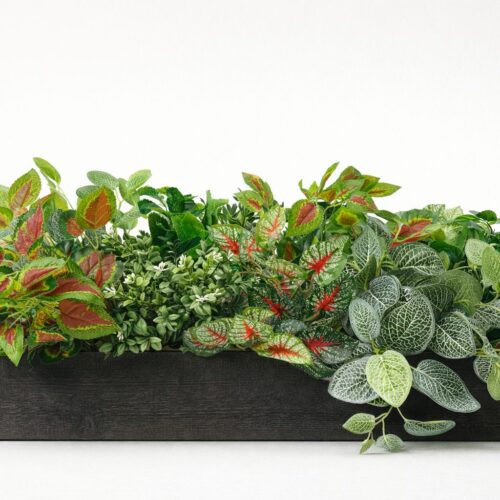
Most systems use green wall panels that connect together across walls, fences or other suitable surfaces. Different foliage styles, shapes, textures and colours can be combined to create anything from simple greenery to a dense feature wall.
Evergreen Direct offers a range of artificial green wall panels designed for different indoor and outdoor environments.
Because the foliage does not grow, artificial living wall products do not need irrigation, soil, watering, pruning, feeding or sunlight. They also do not need replacement plants because of poor growing conditions.
This makes faux living walls particularly useful in environments where maintaining real plants would be difficult.
Do Faux Green Walls Really Need Zero Maintenance?
Artificial green walls are very low maintenance, but describing any decorative surface as requiring absolutely zero maintenance can be misleading.
Indoor panels may occasionally collect dust, particularly in busy commercial environments. A soft cloth, duster or gentle cleaning is usually enough to keep the foliage looking fresh.
Outdoor panels can collect dirt from rain, wind and surrounding surfaces.
Unlike real living walls, however, you do not need to water, prune, fertilise or replace foliage because of seasonal growth or changing weather.
For many homeowners and businesses, that reduction in regular maintenance is one of the main reasons artificial green walls are attractive.
Artificial Green Wall vs Living Wall: Which Is Better?
Neither option is automatically better than the other. A real living wall may be the better choice if your priorities include natural planting, biodiversity and genuine environmental benefits.
An artificial green wall may be more practical if you want year-round greenery, predictable visual appeal and fewer ongoing maintenance requirements.
Artificial green walls do not require watering, irrigation systems or sunlight. Their appearance also remains much more consistent across the seasons. Real living walls, by comparison, need regular care and can change throughout the year depending on plant type and growing conditions.
Real plants may need replacing if they fail, while artificial foliage generally provides a much more predictable finish. Indoor artificial walls are also highly flexible because they are not dependent on natural light.
The better option ultimately depends on what matters most for your project. If you want genuine living plants and are happy to manage them, a living wall may suit you. If you want greenery without the regular work, an artificial green wall may be the more practical choice.
Can Artificial Green Wall Panels Be Used Outdoors?
Yes, but you need panels that are suitable for outdoor use. Outdoor artificial foliage is exposed to sun, rain, wind and changing temperatures. Prolonged exposure to UV rays can affect unsuitable plastic materials, leading to fading or deterioration.
Products designed for exterior walls often use UV blockers or materials engineered to cope better with exposed environments. Always check the specification before installing artificial green wall panels outdoors.
They can work particularly well for covering ugly walls, disguising fences, creating privacy around patios, softening hard landscaping and bringing greenery into small gardens.
They can also create an instant backdrop around seating areas without the need to wait for climbing plants to establish.
You can combine them with Evergreen Direct’s artificial outdoor plants if you want a fuller planting effect without additional watering or upkeep.
Where Do Artificial Living Walls Work Best Indoors?
Artificial green walls are particularly useful in spaces where real plants would struggle.
A feature wall indoors can work well in rooms with low natural light, hallways, reception spaces or areas where watering real plants would be inconvenient.
They are also well suited to offices, cafés, restaurants, hotels, retail spaces, reception areas, meeting rooms, salons and gyms.
For businesses interested in biophilic design, artificial greenery can introduce natural-looking textures and colour without creating another maintenance task for staff.
A plant wall can also help make large commercial environments feel less stark, particularly where there are plain walls or limited access to outdoor green space.
In retail spaces and hospitality environments, faux green walls can also create a memorable visual feature without introducing irrigation systems or soil into customer-facing areas.
Do Artificial Green Walls Improve Air Quality?
Artificial green walls do not clean the air in the way living plants potentially can.
An artificial plant wall provides visual and decorative benefits rather than biological ones. It can contribute to the look and feel associated with biophilic design, but it should not be presented as providing the same environmental impact as real plants.
If air quality, biodiversity or habitat creation is the main objective, a genuine living wall may be more appropriate.
If the main objective is creating greenery in a practical, low-maintenance way, an artificial green wall may be the ideal solution.
How Much Does an Artificial Green Wall Cost Compared With a Living Wall?
Costs vary according to the size of the wall, the type of panels, installation requirements and the foliage styles chosen.
Artificial systems generally have fewer long-term costs because they do not require irrigation, water, fertiliser or replacement plants.
A real living wall may involve a more involved initial installation because planting systems, irrigation, drainage, live plants and professional setup may all be required.
There can also be ongoing costs associated with maintenance, watering, replacement planting and additional lighting in indoor environments.
That does not necessarily make artificial walls better value in every situation. If having real plants is central to the project, the additional cost may be justified.
For homeowners or businesses mainly looking to create a strong visual impact without ongoing plant care, artificial greenery is often the more practical choice.
How Long Do Artificial Green Walls Last?
How long a green wall lasts depends on where it is installed and the quality of the materials used. Indoor artificial green walls are generally protected from rain and direct sunlight, so they tend to experience less environmental exposure.
Outdoor panels face much tougher conditions. UV rays, rain, wind and temperature changes can all affect unsuitable materials over time.
Choosing foliage engineered for outdoor use and installing the panels securely will help improve long-term performance.
It is also worth checking that the product is suitable for the exact environment before installation, particularly on exposed exterior walls or sunny fences.
A wall that receives strong sunlight for most of the day may need a different product specification from a shaded garden fence or an indoor feature wall.
How Do You Choose the Right Green Wall for Your Space?
Start with the practical conditions rather than the appearance. If you are considering a real living wall, think about whether the plants will receive enough sunlight, how watering and irrigation will work and whether the wall is easy to reach for maintenance.
It is also worth considering which plants will suit the environment and what will happen during colder or darker months.
For an artificial living wall, think about whether the panels will be installed indoors or outdoors, how exposed they will be to sunlight and rain and how dense you want the finished greenery to look.
The surrounding space also matters. A garden wall may suit a natural mix of leaf shapes and green tones, while a restaurant or retail space may benefit from a more structured feature wall.
There is no need for every artificial green wall to look identical. Mixing foliage styles, colours and textures can create a much more convincing result and help the wall sit naturally within the rest of the space.
Artificial Green Wall or Living Wall: Which Should You Choose?
A real living wall can be a rewarding way to bring genuine plants into places where traditional planting is limited.
It can support biodiversity, introduce natural growth and provide environmental benefits that artificial plants cannot recreate.
The compromise is maintenance. Real living walls need appropriate sunlight, suitable plants, irrigation and regular care.
Artificial living walls focus on practicality. They create the visual appeal and texture of planting without soil, watering or seasonal plant care. They can work indoors, outdoors, across fences, on exterior walls and in commercial environments where maintaining real plants would be difficult.
The best choice is not simply the greenest-looking wall. It is the one that continues to work for your space six months, two years and several seasons after installation.
If you are considering an artificial option, explore Evergreen Direct’s artificial green wall collection to compare different panel styles, foliage types and options for indoor and outdoor spaces.